
Conscious Fridays: Responding Instead of Reacting
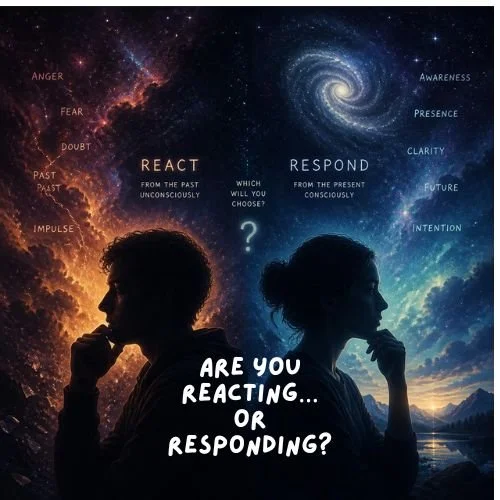
The Moment Between Trigger and Choice
Have you ever had a moment where you reacted before you even had time to think?
A sharp response to someone you love.
A defensive reaction when you felt misunderstood.
A wave of anger, fear, sadness, or frustration that seemed to take over your entire body.
And afterwards, you wondered:
"Why did I respond that way?"
The truth is, many of our reactions are not conscious choices. They are protective patterns created by our nervous system — often formed through past experiences, relationships, and moments when we learned we needed to defend, withdraw, please, or control in order to feel safe.
The journey of healing is not about eliminating emotions or never being triggered.
It is about creating enough awareness and presence that we can meet our emotions with compassion — and choose how we respond.
This is the difference between reacting and responding.
Understanding Emotional Triggers
A trigger is not simply something that annoys us.
A trigger is an emotional activation — a moment when something happening in the present connects with an unresolved experience from the past.
Someone’s tone of voice may remind us of being criticized. A disagreement may awaken an old fear of rejection. Feeling ignored may bring up memories of not feeling valued.
The present moment becomes connected to the past, and our nervous system responds as if the old experience is happening again.
This is why our reactions can sometimes feel bigger than the situation itself.
A small moment can create a big emotional response because our body is not only responding to what is happening now — it is responding to what it remembers.
You r Nervous System Is Always Listening
Before we can consciously choose a response, we need to understand the role of our nervous system.
Our nervous system’s primary purpose is protection.
It is constantly asking:
“Am I safe?”
When we feel safe, we are more able to:
listen
connect
communicate clearly
think creatively
access compassion
When our nervous system senses danger, we may move into survival patterns:
Fight:
Anger, defensiveness, criticism, needing to be right.
Flight:
Avoiding, overworking, distracting, escaping.
Freeze:
Shutting down, feeling numb, disconnecting.
Fawn:
People pleasing, abandoning our own needs to maintain harmony.
These responses are not weaknesses.
They are intelligent survival strategies that helped us navigate earlier experiences.
The healing happens when we learn that we have more choices available to us now.
The Space Between Trigger and Response
One of the most powerful moments in personal growth happens in the space between what we feel and what we do.
That space is where awareness lives.
When we pause, even for a few seconds, we give our nervous system a chance to return to the present moment.
We can ask:
“What is happening inside me right now?”
“Am I responding to this moment, or am I responding to an old wound?”
“What would a loving response look like?”
This pause is not about suppressing emotions.
It is about becoming the compassionate observer of our own experience.
Simple Practices for Moving From Reaction to Response
1. Pause and Breathe
Before responding, take a moment to breathe.
A longer exhale signals safety to the nervous system and creates space between the trigger and your reaction.
Try:
Inhale gently.
Exhale slowly.
Relax your shoulders.
Feel your feet on the ground.
Return to the present.
2. Name What You Feel
Instead of becoming the emotion, witness it.
Instead of:
"I am angry."
Try:
"I notice anger moving through me."
This small shift creates separation between who you are and what you are experiencing.
You are not your emotions.
You are the awareness holding them.
3. Listen to the Message Beneath the Emotion
Every emotion carries information.
Anger may reveal a boundary that needs attention.
Sadness may reveal something meaningful has been lost.
Fear may reveal a place asking for safety and reassurance.
When we stop fighting our emotions, they often become guides.
4. Practice Presence in Everyday Moments
Presence is not only created during meditation or healing sessions.
It is built in ordinary moments:
Feeling the warmth of the sun.
Listening fully when someone speaks.
Eating slowly.
Walking in nature.
Taking a conscious breath before opening your phone.
Every moment of presence strengthens your ability to remain connected when life becomes challenging.
Healing Happens When We Meet Ourselves With Compassion
Many people believe emotional healing means becoming someone who never gets triggered.
But being human means having emotions. The goal is not perfection. The goal is awareness.
A regulated nervous system does not mean we never feel anger, fear, grief, or frustration.
It means we can stay connected to ourselves while experiencing those emotions.
We can feel deeply without being controlled by what we feel.
We can honor our past without allowing it to dictate our present.
We can choose a new way forward.
Coming Home to Yourself
At Maui Healing Retreat, we believe healing is the process of returning home to the most authentic version of yourself.
Through trauma-informed practices, somatic awareness, breathwork, and intentional reflection, we create space to understand the patterns that have shaped you — and reconnect with the wisdom already within you.
Because the future we long for begins with the healing we choose today.
Reflection Questions
Take a moment to explore:
✨ What situations tend to trigger the strongest reactions in me?
✨ What emotion do I find hardest to feel?
✨ What does my nervous system need in order to feel safe?
✨ How would my relationships change if I responded from presence rather than protection?
Continue your journey with Maui Healing Retreat.
Explore our trauma-informed wellness experiences designed to support deep healing, self-awareness, and transformation.